
Our Shorebirds
The Ōmaha Shorebird Sanctuary is home to several species of native and endemic shorebirds. Below are three categories of shorebirds that rely on the sanctuary: locals, visitors, and long-haul travellers. Our conservation efforts focus on protecting these vulnerable populations.
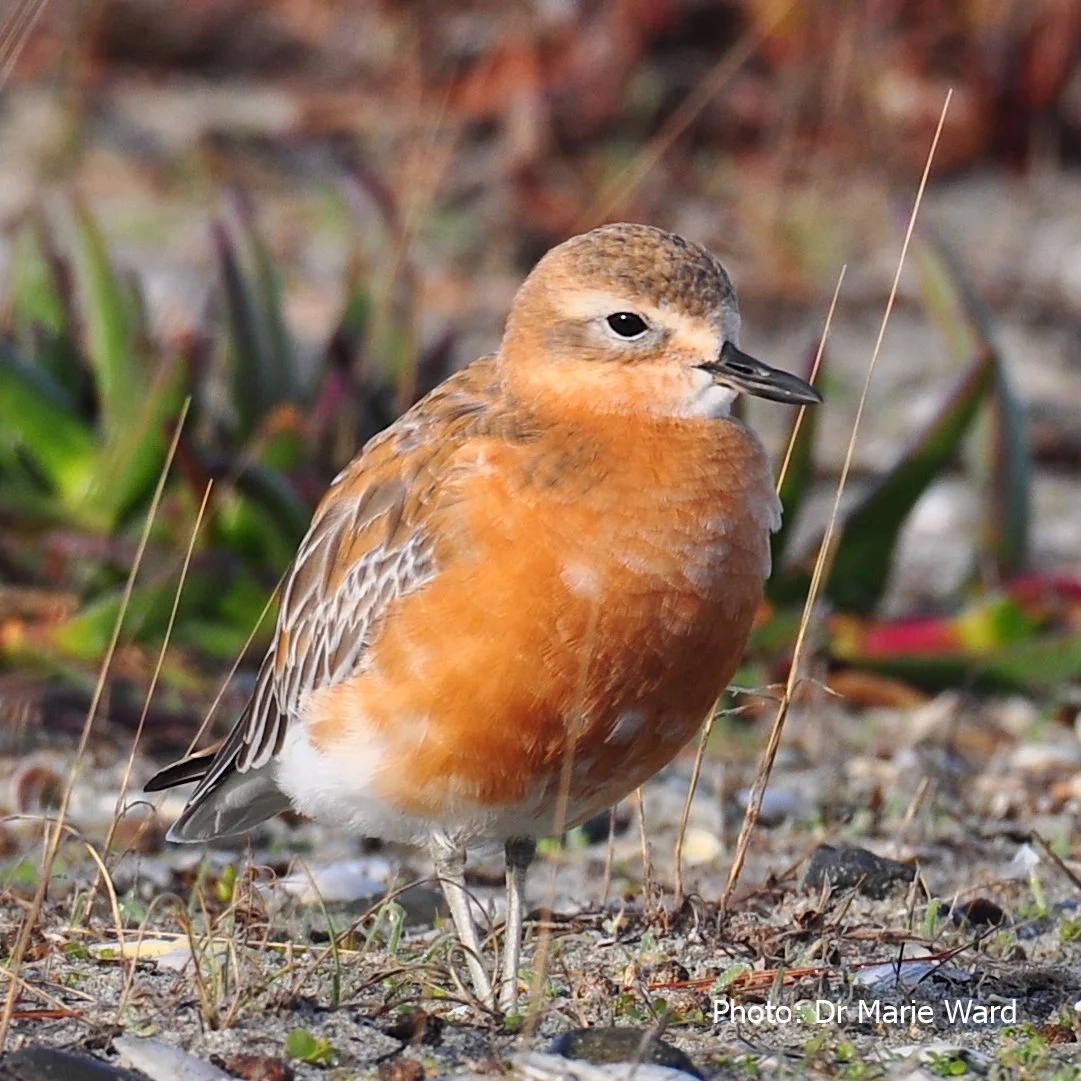
LOCALS: Northern New Zealand dotterel | Variable oystercatcher | Reef heron | Pied Shag
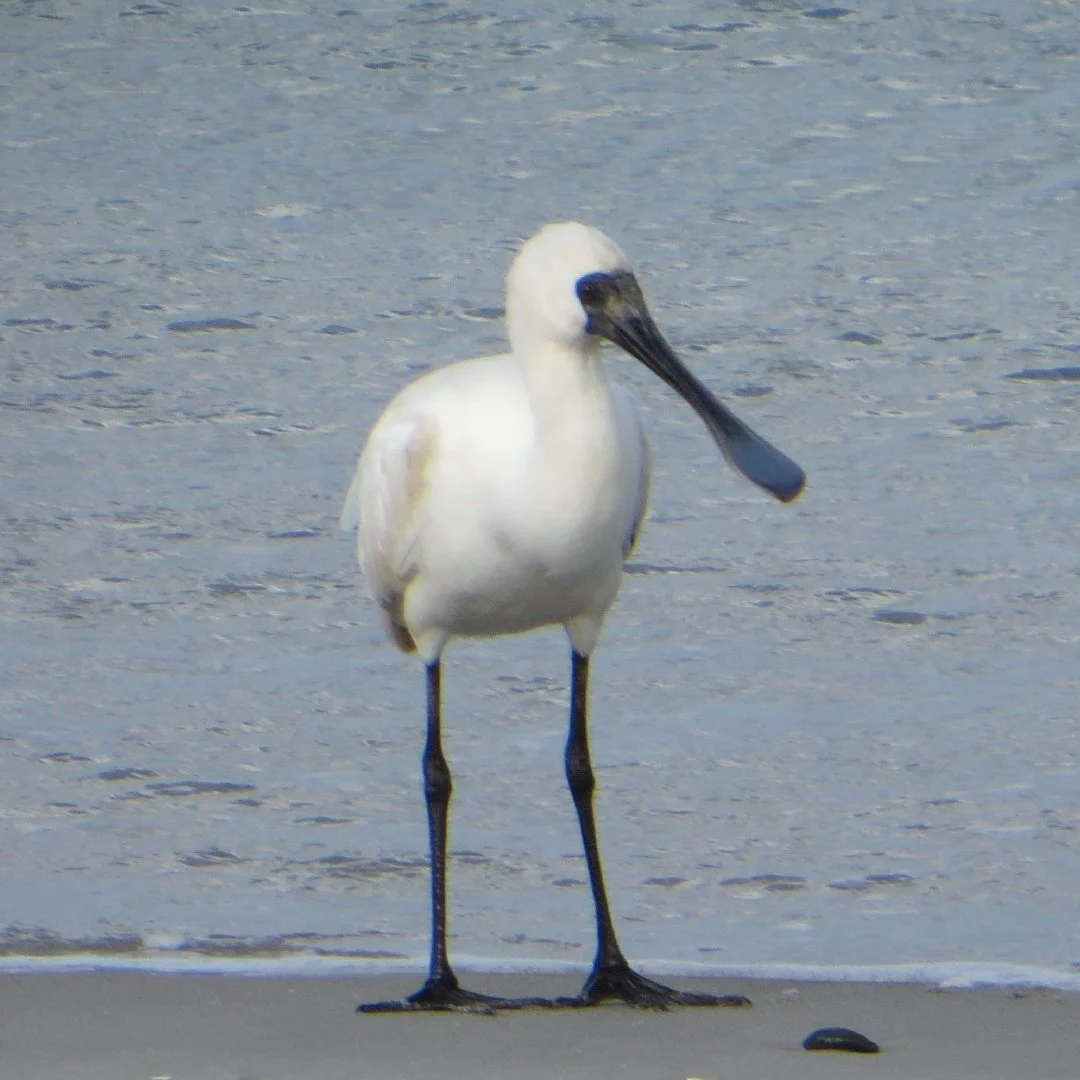
VISITORS: Wrybill | Fairy tern | Pied stilt | South Island oystercatcher | Caspian tern | Banded dotterel | Spoonbill
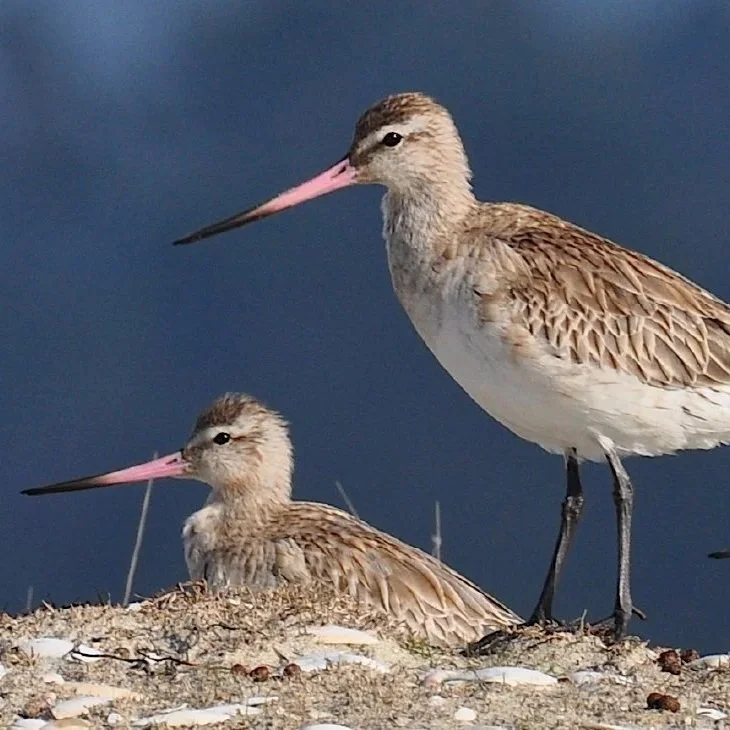
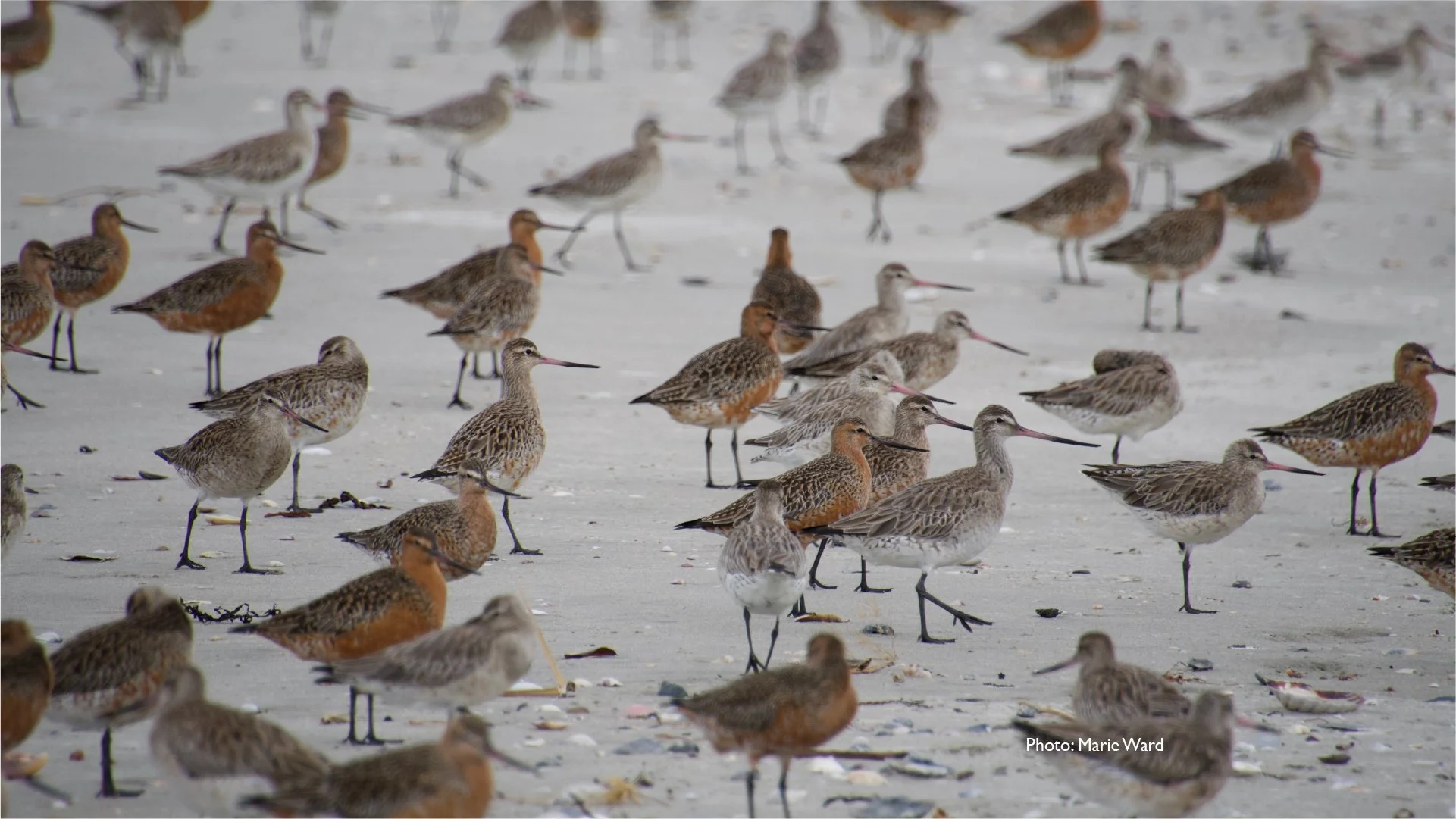
LONG HAUL: Bar-tailed godwit
Locals
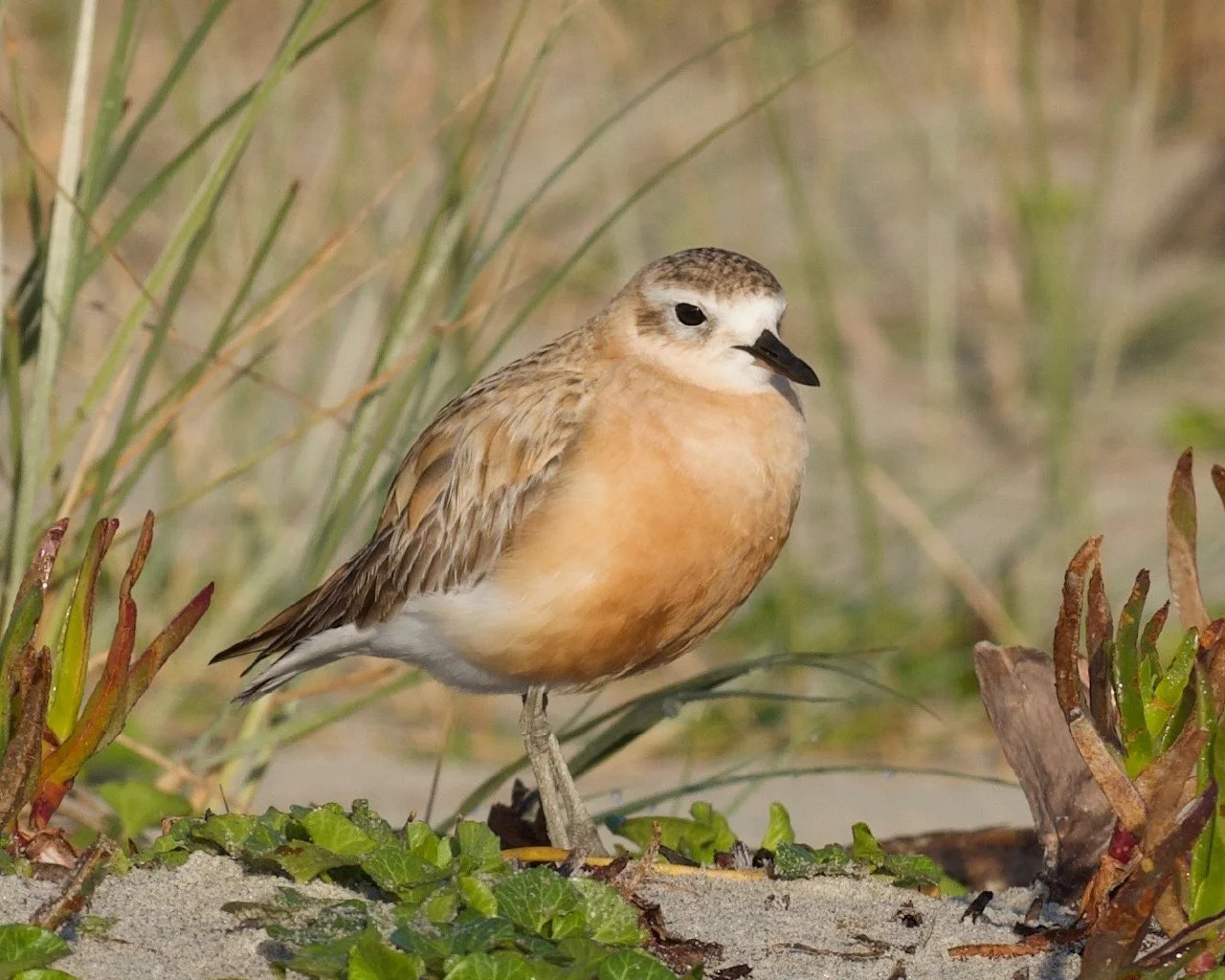
Photo: Marie Ward
Conservation Status: Threatened - Nationally Vulnerable
Northern New Zealand Dotterel | Tūturiwhatu
Anarhynchus obscurus
-
The dotterels at Ōmaha have been monitored for more than three decades. Therefore, we know that Ōmaha is an important breeding site and hosts one of the largest post-breeding flocks where birds congregate for seasonal social networking. The breeding success of dotterels at Ōmaha depends on people and the protection programme that is put in place.
-
Dotterel chicks feed themselves almost as soon as they are hatched. The parents stay close and show them tasty treats but they do it for themselves. Give them space during the breeding season (September to February) to safely venture to the shoreline to find worms and sandhoppers.
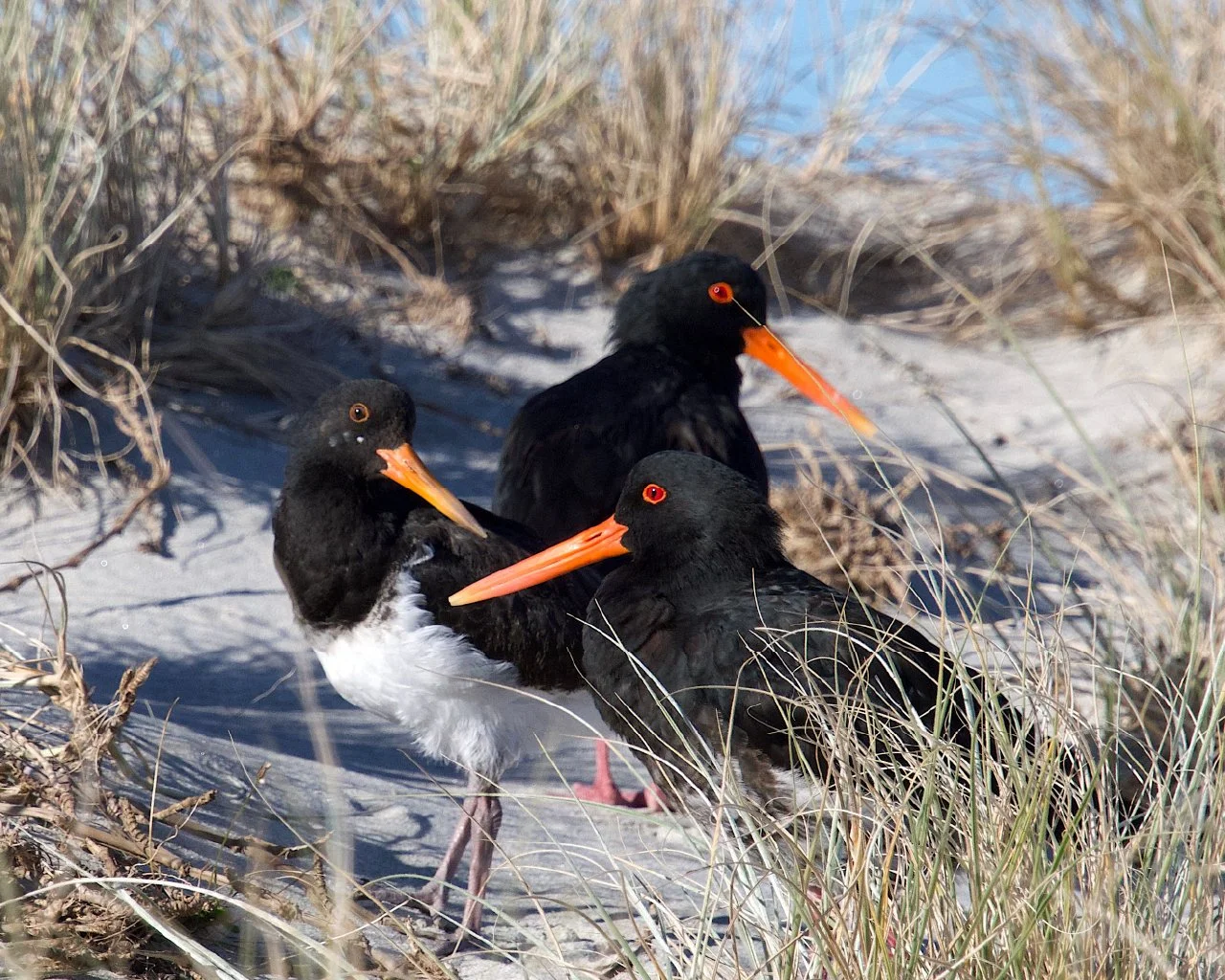
Photo: Marie Ward
Conservation Status: Recovering
Variable oystercatcher | Tōrea pango
Haematopus unicolor
-
Oystercatchers will benefit from the protection programme aimed at the dotterels.
-
Oystercatchers get vocal when you are too close! They can also be aggressive when a dotterel chick strays into their territory, so keep your distance during breeding season (September to January) and give them a chance.
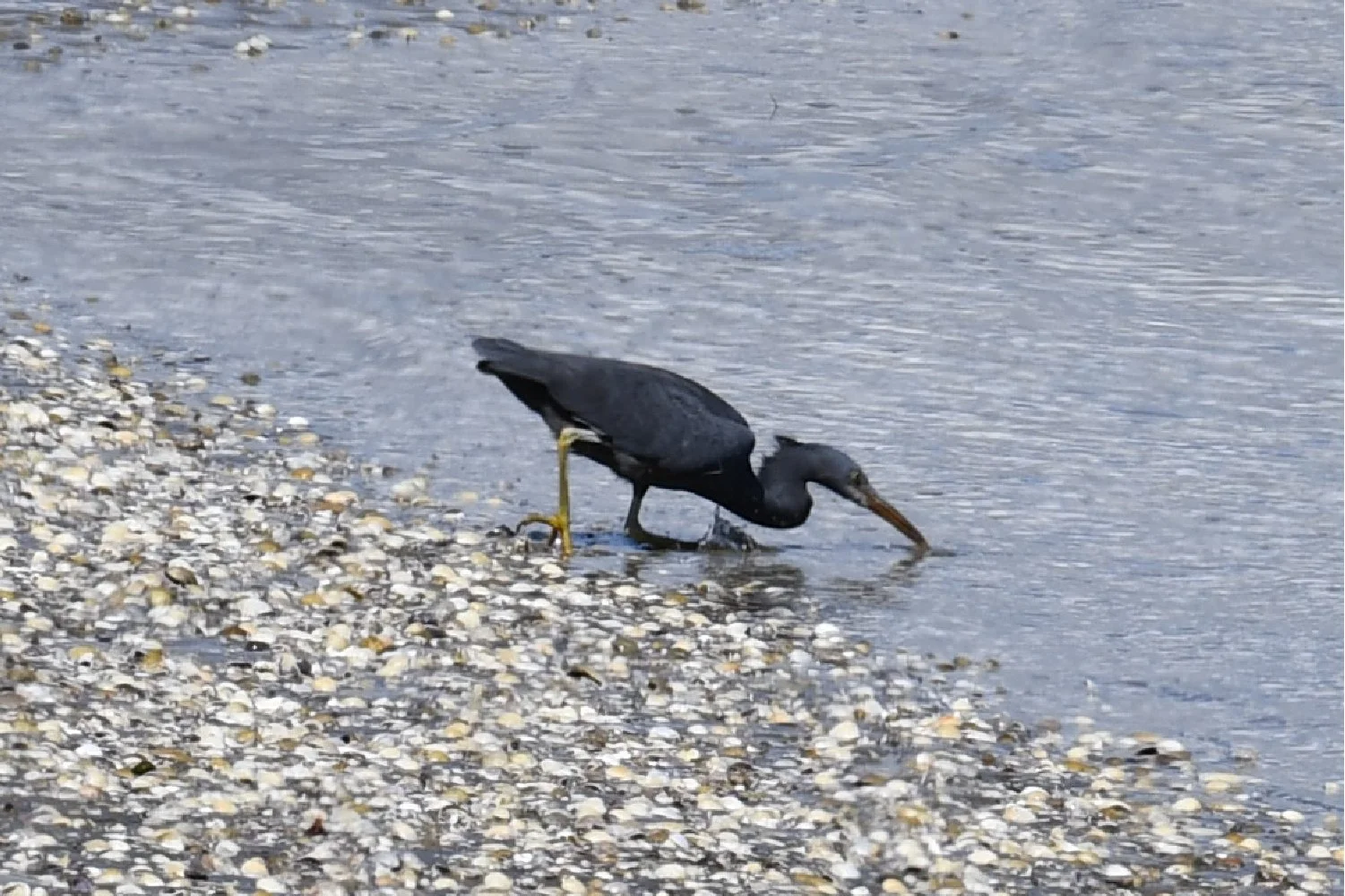
Photo: Marie Ward
Conservation Status: Nationally Endangered
Reef heron | Matuku moana
Egretta sacra
-
he New Zealand reef heron population is estimated at only 300-500 birds. Whangateau Harbour is home to a pair of reef herons and they feed on the mudflats and along the harbour edge, including the sanctuary.
-
Dogs love chasing birds, but shorebirds already face enormous pressure. Please keep dogs away from feeding and roosting birds so they can rest and refuel safely.
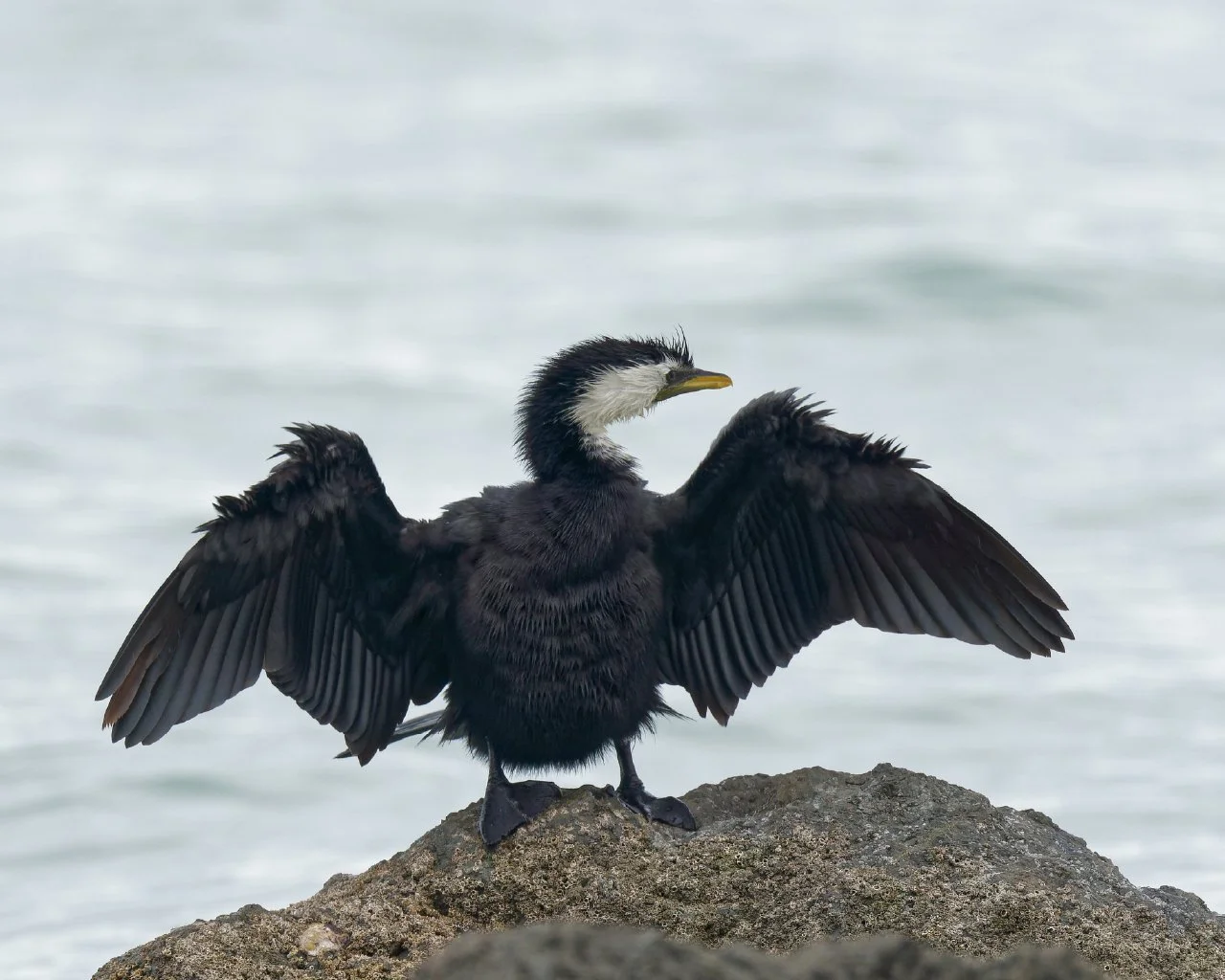
Conservation Status: Recovering
Pied shag | Kāruhiruhi
Phalacrocorax varius
-
Pied shags nest in trees on coastal cliffs. They can be seen catching fish and drying their wings around the rock groynes and in the Whangateau Harbour.
-
Join us in calling on Council and MPI Fisheries Management for a total ban on set netting in the Whangateau Harbour. Set nets drown fishing birds and marine mammals. MPI have issued >70 warnings for illegal set nets in our harbour. Many more nets go unnoticed at night time.
Visitors
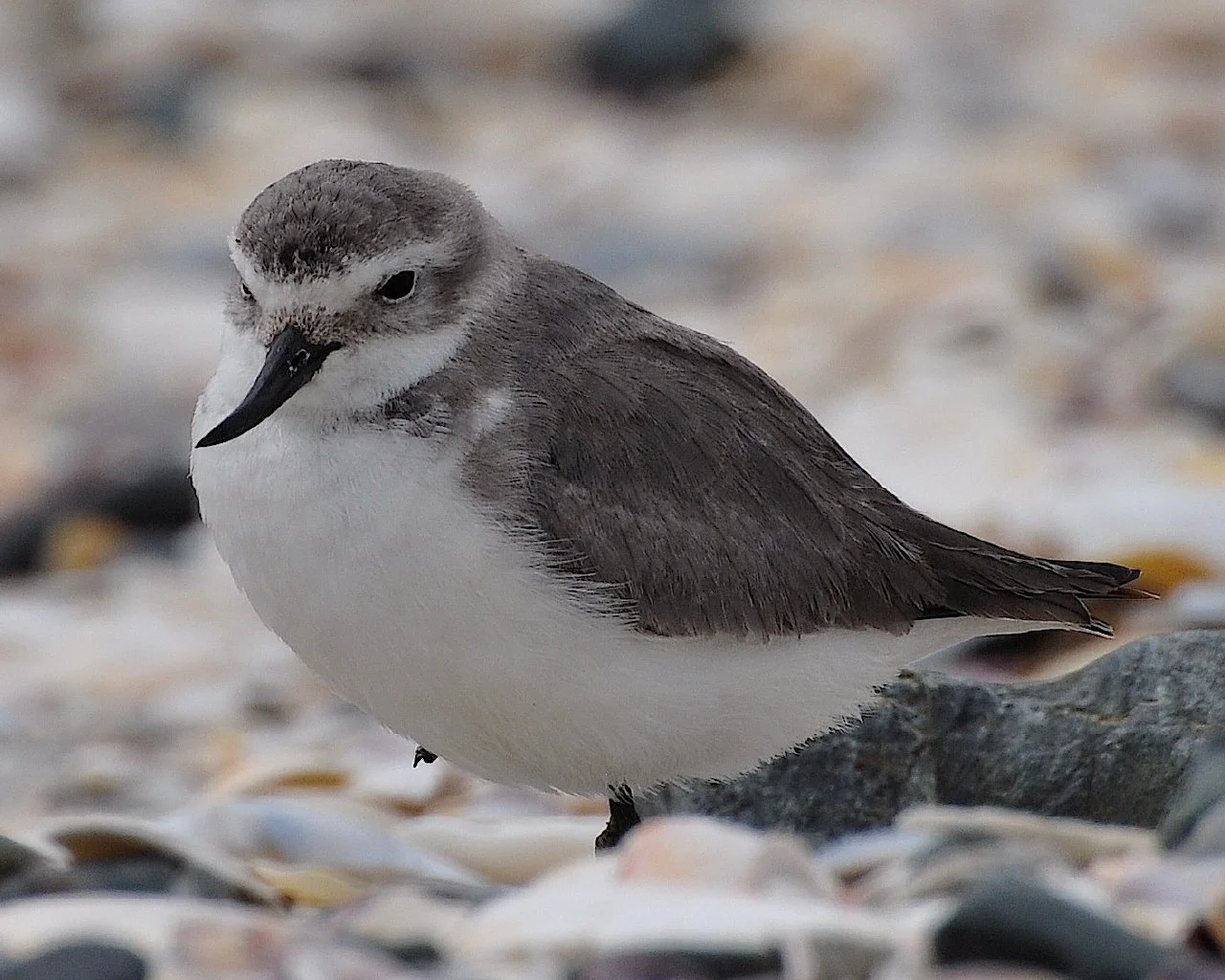
Photo: Marie Ward
Conservation Status: Nationally Increasing
Wrybill | Ngutu pare
Anarhynchus frontalis
-
Wrybills are our autumn guests, visiting Ōmaha from the South Island where they breed on the braided riverbeds. Their wonky sideways beaks are custom-made for reaching insect larvae underneath the rounded river stones.
-
When you’re taking a bucket-list 4-wheel-driving tour of the South Island stay out of the riverbeds.
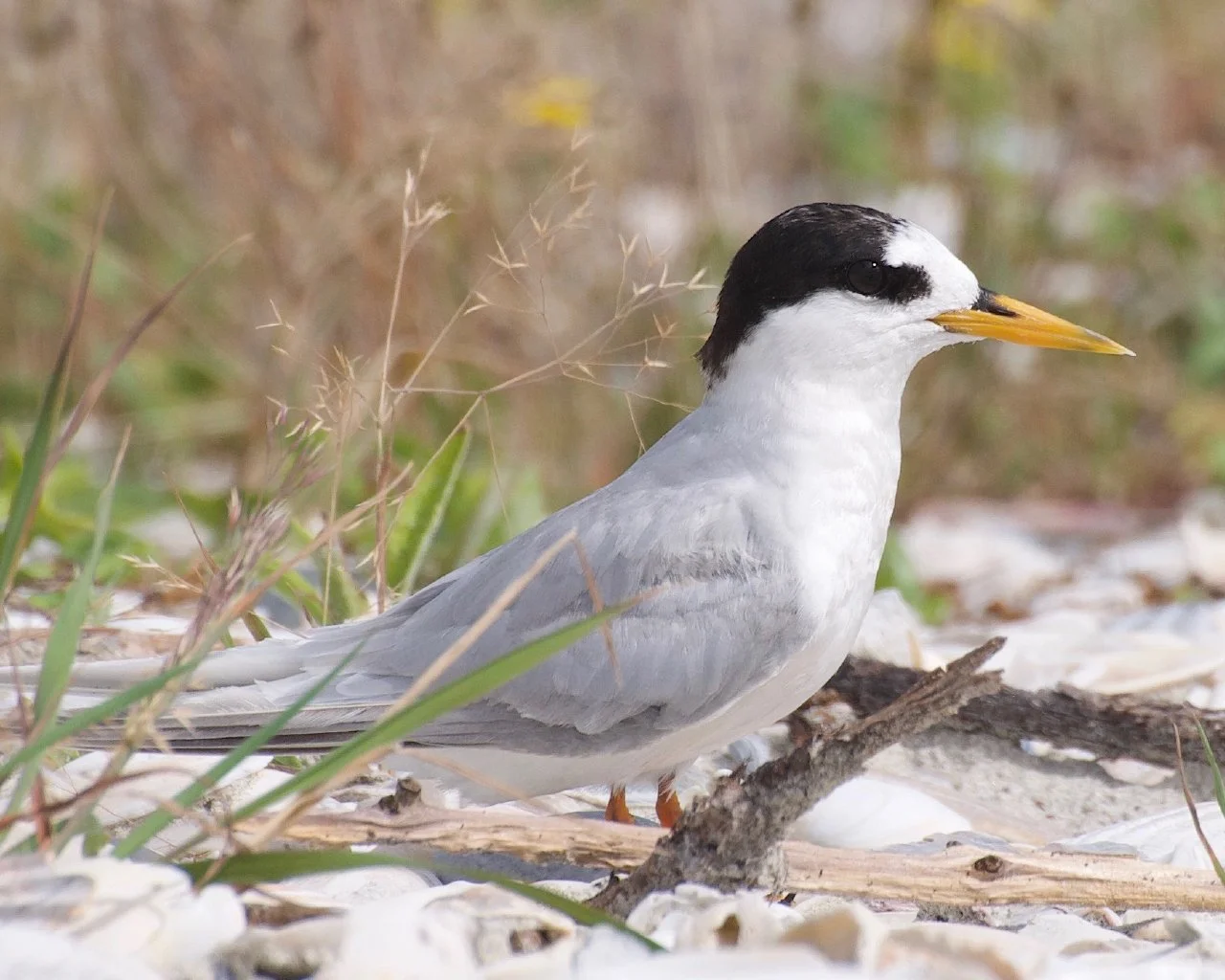
Photo: Marie Ward
Conservation Status: Nationally Critical
Fairy Tern | Tara iti
Sternula nereis
-
This is the rarest breeding bird in Aotearoa – there are fewer than 40 individual birds remaining and only 10 breeding females. The Trust is working with DOC’s Tara iti recovery group to make Ōmaha safe so it can be a future nesting site. Fairy terns regularly visit the sanctuary to rest at high tide and feed in the estuary.
-
No nesting shorebird is safe if cats roam at night inside the sanctuary — adults die defending their nests. Keeping our cats indoors at night is one of the simplest and most effective ways we can help.
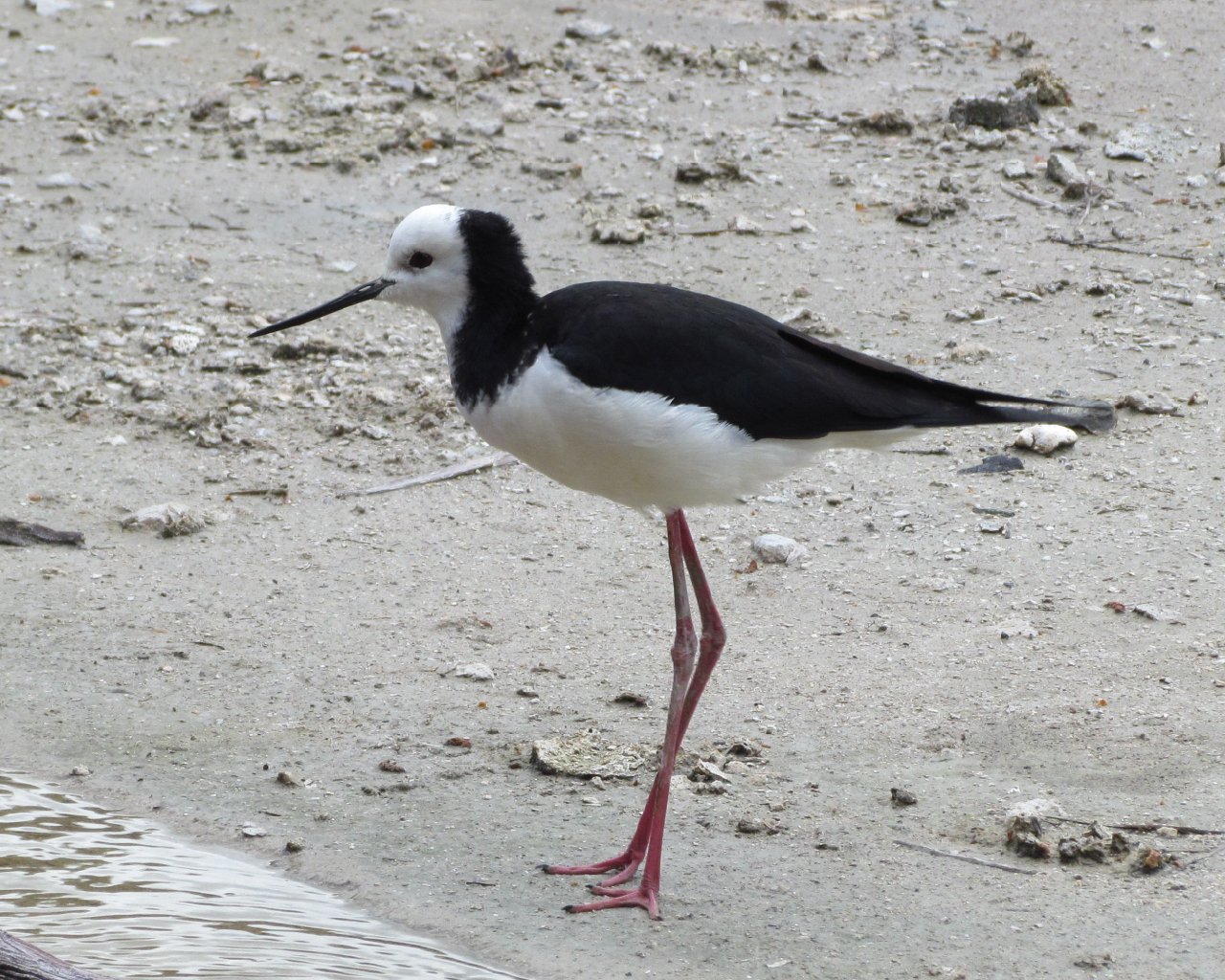
Photo: Rocky Via Adobe
Conservation Status: Not Threatened
Pied stilt | Poaka
Himantopus himantopus
-
Flocks of noisy Pied stilts visit to feed in the estuary and then come to the sanctuary to roost (rest) at high tide. They have been known to breed in the sanctuary, but in low numbers.
-
Time your visit to the sanctuary to let them rest at high tide and remember to bring binoculars to get a better look.
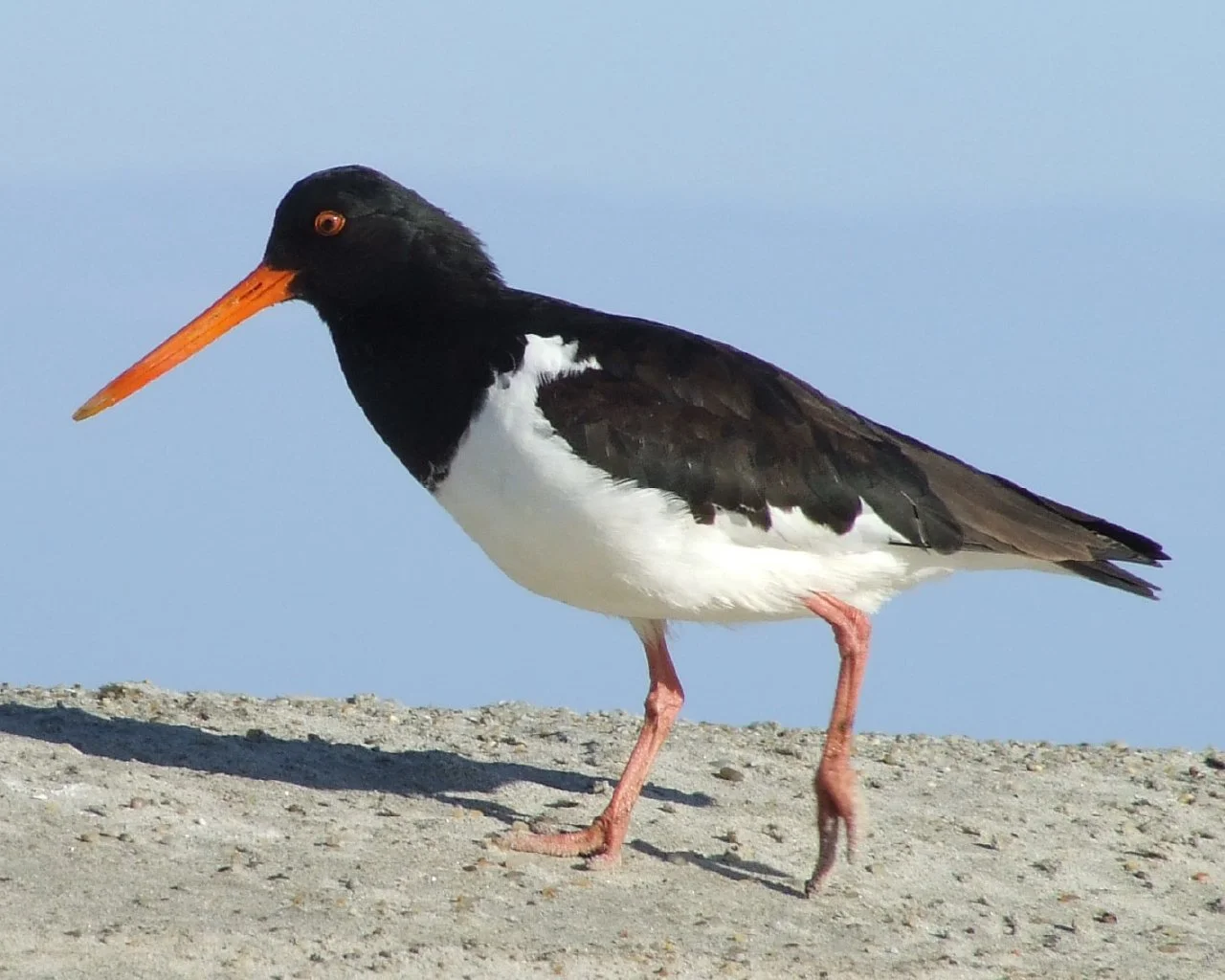
Conservation Status: Declining
South Island pied oystercatcher | Tōrea
Haematopu finschi
-
Another regular visitor to the sanctuary and harbour. After breeding in the braided river beds of the South Island they come to our abundant estuary to feed, and can be seen ffrom December to July.
-
Enjoy the wonder of nature all around you and be kind to animals.
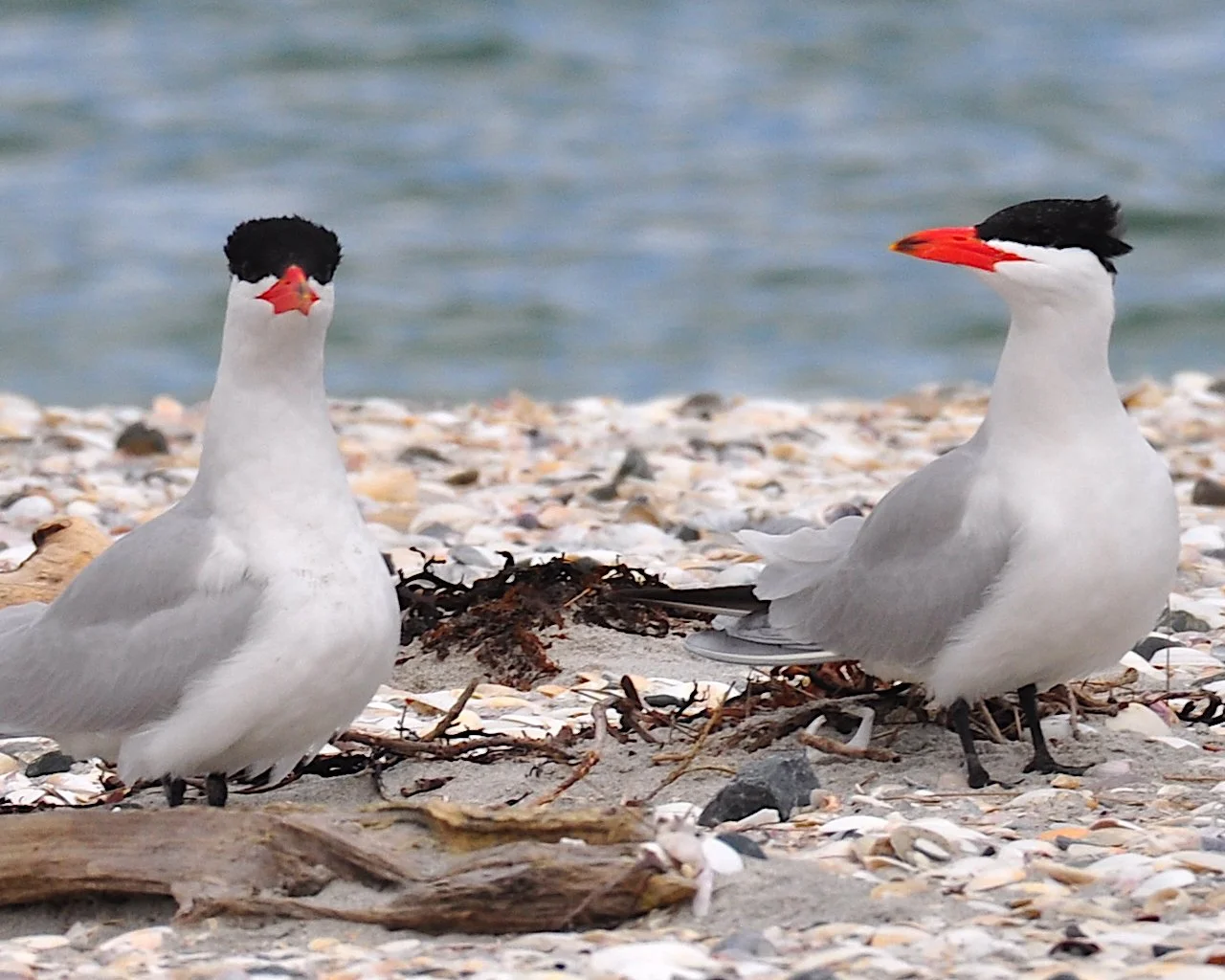
Photo: Marie Ward
Conservation Status: Threatened - Nationally Vulnerable
Caspian tern | Taranui
Hydroprogne caspia
-
Caspian terns are present all year round at Ōmaha, where they are usually seen singly as they forage in the harbour, or sometimes in small roosting flocks at rest in the sanctuary.
-
The sanctuary is a place set aside for shorebirds. Picnicking, jogging, swimming and sunbathing are best enjoyed along the rest of the beach.
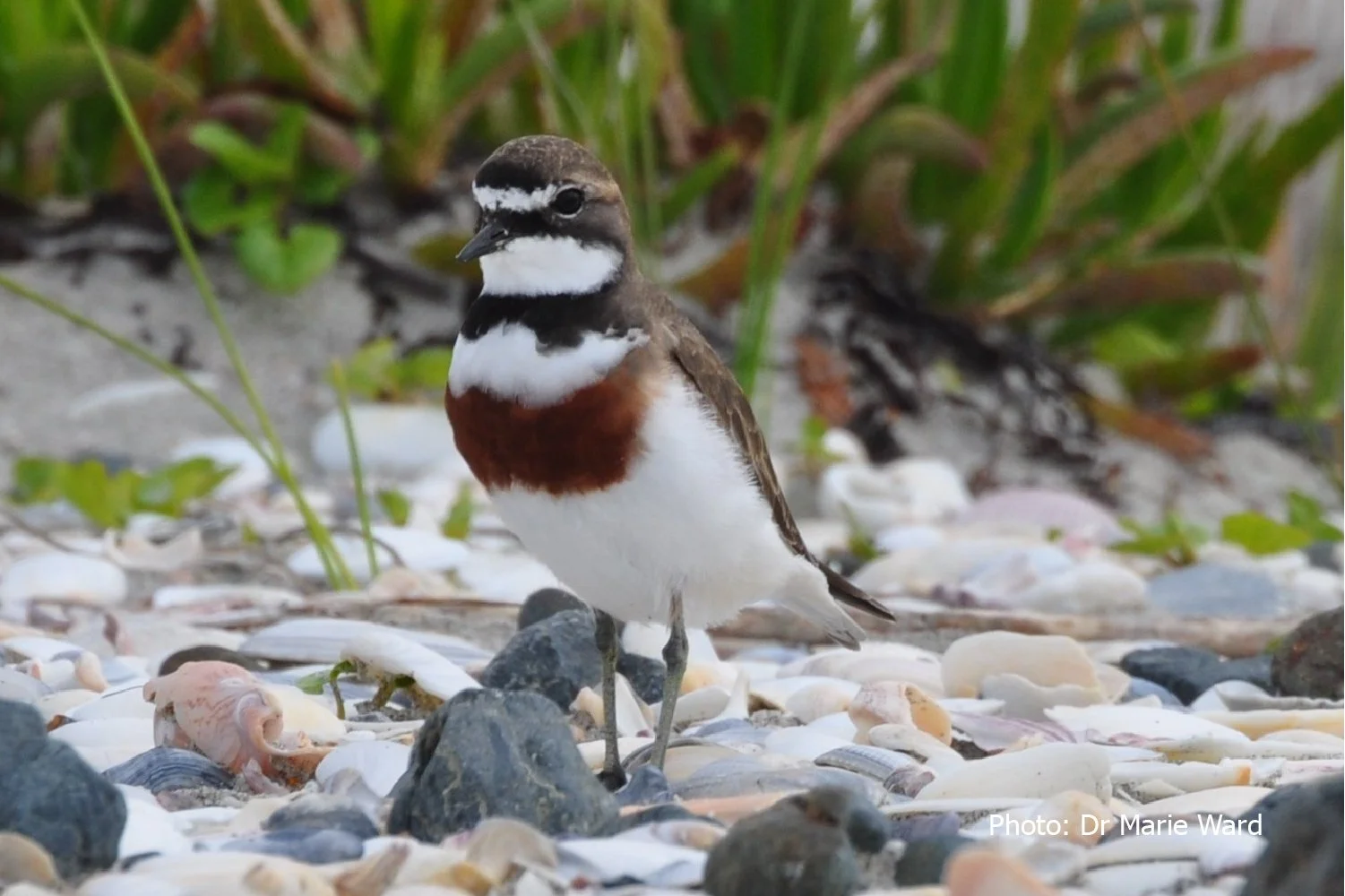
Photo: Marie Ward
Conservation Status: Declining
Banded dotterel | Pohowera
Anarhynchu bicinctus
-
Sometimes a few pairs breed at the sanctuary from September to January, and the harbour attracts a post-breeding flock from January to June.
-
We can all help reduce predator numbers at home. Friendly trapping groups around the harbour can lend traps and record catches as part of the community effort.
Long haul
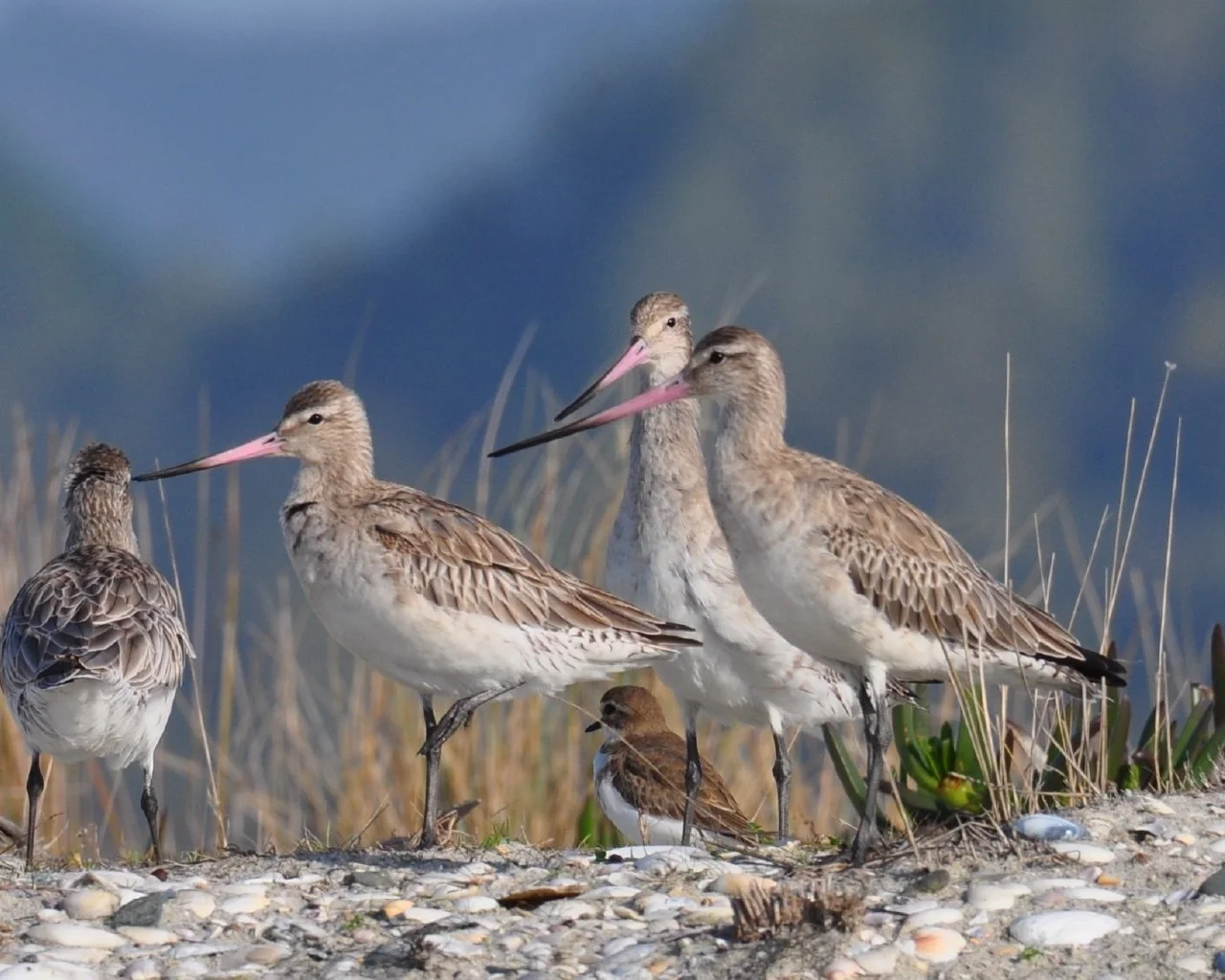
Photo: Marie Ward
Conservation Status: Declining
Bar-tailed godwit | Kuaka
Limos lapponica
-
Following their breeding season in western Alaska, bird arrive from early September, usually after a non-stop 8-9 days flight. They arrive exhausted and depleted, and they need to head out at low tide to refuel then go to sleep at high tide. Kuaka are fully protected in New Zealand.
-
Running is great fitness, and there are excellent routes around Ōmaha — but please avoid running inside the sanctuary. High tide is essential rest time.
Support Us
Your donation helps us protect critical habitats, conduct research, and educate the community about shorebird conservation.
Support our work by purchasing a limited-edition tea towel
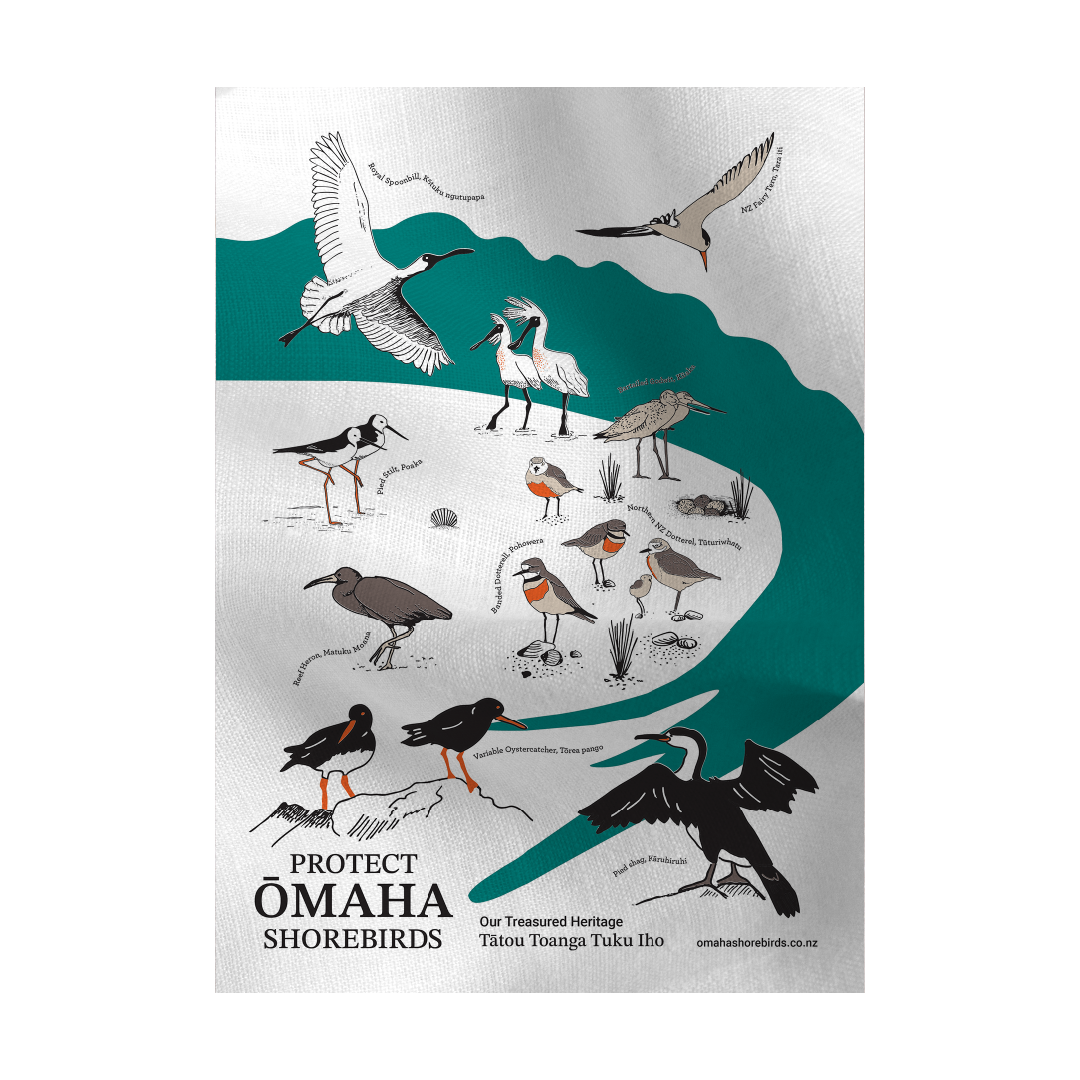
Since 2009, the Trust has worked to make the Ōmaha Shorebird Sanctuary a safe place for shorebirds to nest, roost and feed. 100% of the funds raised from the sale of these tea towels will support the Trust’s work in monitoring, trapping, advocacy and awareness.
The Ōmaha Shorebird Protection Trust collaborated with local textile artist Ali Davies to illustrate the amazing shorebirds of Ōmaha Beach and Whangateau Harbour. A cheerful addition to any kitchen and an excellent choice for purposeful gifting. Thanks to Dan Marrow, our Community Park Ranger, and the Rodney Local Board for their help with this project.
Screen-printed on 100% organic cotton
Loop for hanging
Size: 50 × 70 cm
Limited Edition