
Who we are
Community kaitiakitanga since 2010
OUR TRUST
The Ōmaha Shorebird Protection Trust was established in 2010, a charitable trust whose purpose is set out in the Trust Deed: “to benefit the community by protecting all shorebirds, particularly Threatened, At Risk and Migrant species and their habitats on Ōmaha Spit and in Whangateau Harbour”
Charity number: CC43403
info@omahashorebirds.co.nz
OUR SANCTUARY
The Ōmaha Shorebird Sanctuary is a local purpose reserve managed by Rodney Local Board on behalf of Auckland Council. The primary purpose of the reserve is wildlife protection, and the Rodney Local Parks Management Plan sets out the values, issues and intentions for future management.
Rodney Local Board manages over 300 local parks, and the Ōmaha Shorebird Sanctuary is unique within the portfolio – it is the only predator-fenced reserve with internationally significant wildlife values.
OUR VISION
Ōmaha Shorebird Sanctuary is a safe place where shorebirds can feed, roost and breed undisturbed.
What we do

Monitoring and protection
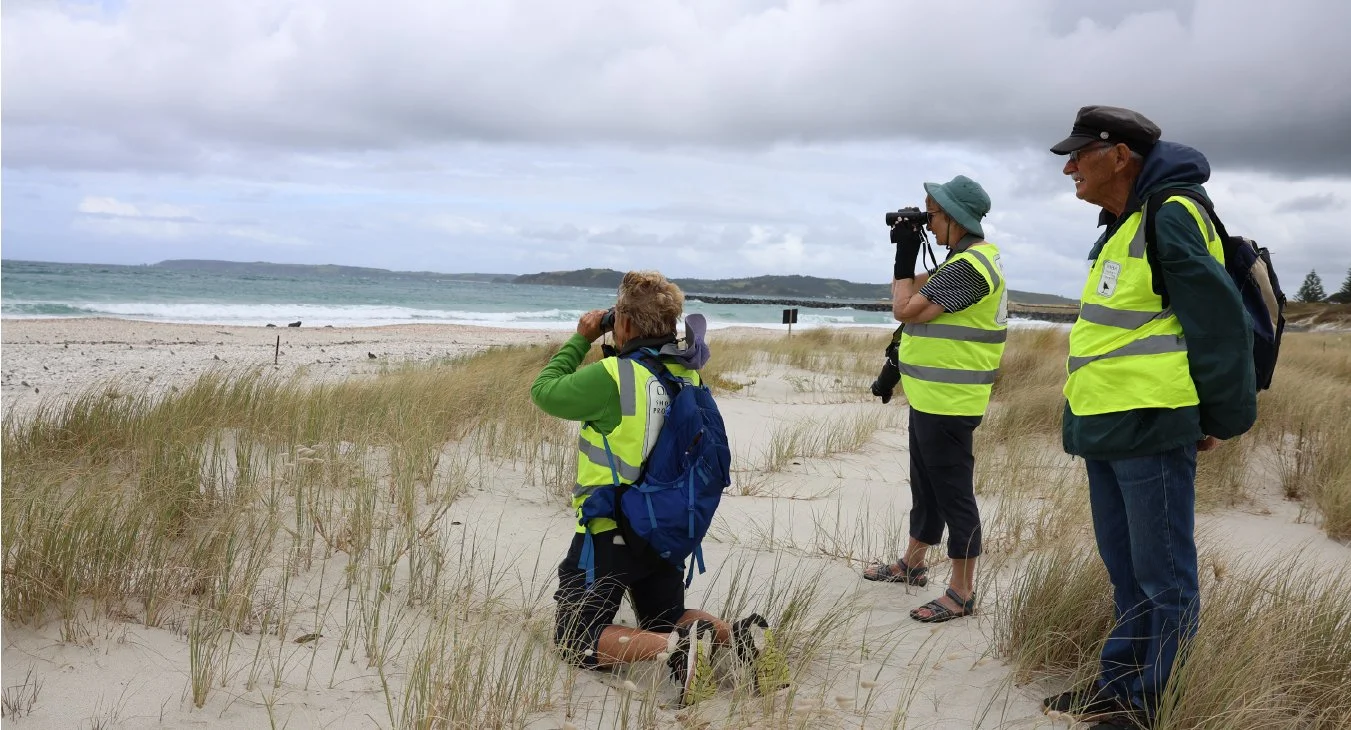
Our volunteers trap predators, tape off breeding areas, monitor and protect nests, record intrusions and disturbance and engage with visitors.
Advocacy and information
The Trust provides reliable data to Council to support decisions to fulfil the wildlife protection purpose of the reserve, and advocates for active management.
Awareness and connection
We work with partners and supporters to raise awareness of our shared taonga (treasure), encouraging community kaitiakitanga (guardianship) and providing opportunities to get involved.
OUR HISTORY
A Sanctuary in the making
1980s
NZ dotterel numbers are plummeting. Volunteers put up signage and temporary fencing, but predators and dogs are uncontrolled.
2000s
1990s
Community predator trapping begins. Efforts begin to bring together the Auckland Regional Council, Rodney District Council, landowner Alistair Dryden, the Department of Conservation, and local community members to protect part of the Ōmaha coastal breeding area.
A community, council and conservation collaboration milestone in 2000 sees the spit vested in the District Council and gazetted as North Ōmaha Reserve.
2010s
The community formalised its commitment to protecting the area by forming the Ōmaha Shorebird Protection Trust. The Trust, Auckland Council, the Department of Conservation and the community worked together to construct the existing predator fence in 2012. Following the creation of Auckland Unitary Council in 2010, Rodney Local Board became responsible for managing the reserve.
The Trust’s video includes naturalist Ruud Kleinpaste (MNZM), marine biologist Dr Roger Grace (QSM), ornithologist Dr John Dowding and Trust member/volunteer Dr Marie Ward. The key messages remain relevant today!
2020s
The Trust continues to undertake predator control, monitor and protect breeding shorebirds and raise awareness of locals and visitors. Reporting continues to Auckland Council and the Rodney Local Board of consistent breeding failure and the alarming prospect of localised extinction. Ōmaha and surrounding areas develop and the ‘holiday highway’ brings increasing summer visitors.
2030s
What comes next?
We have come so far and done so much. It is time to write the next chapter of community kaitiakitanga that stretches into the 2030s and beyond.
Why it matters
Dotterels are rarer than kiwis and found nowhere else on earth. With only around 2,600 birds remaining, their survival depends entirely on us. Our Ōmaha birds are a permanent local population — this is their home, and there is nowhere else for them to go. They return each year to the same patch of dune to breed, forming lifelong pair bonds. The male sits on the nest at night, making him especially vulnerable to cats entering the sanctuary. As a result, there are fewer males than females in the population. Protecting these birds now requires renewed commitment and active management so this sanctuary can truly function as a refuge.
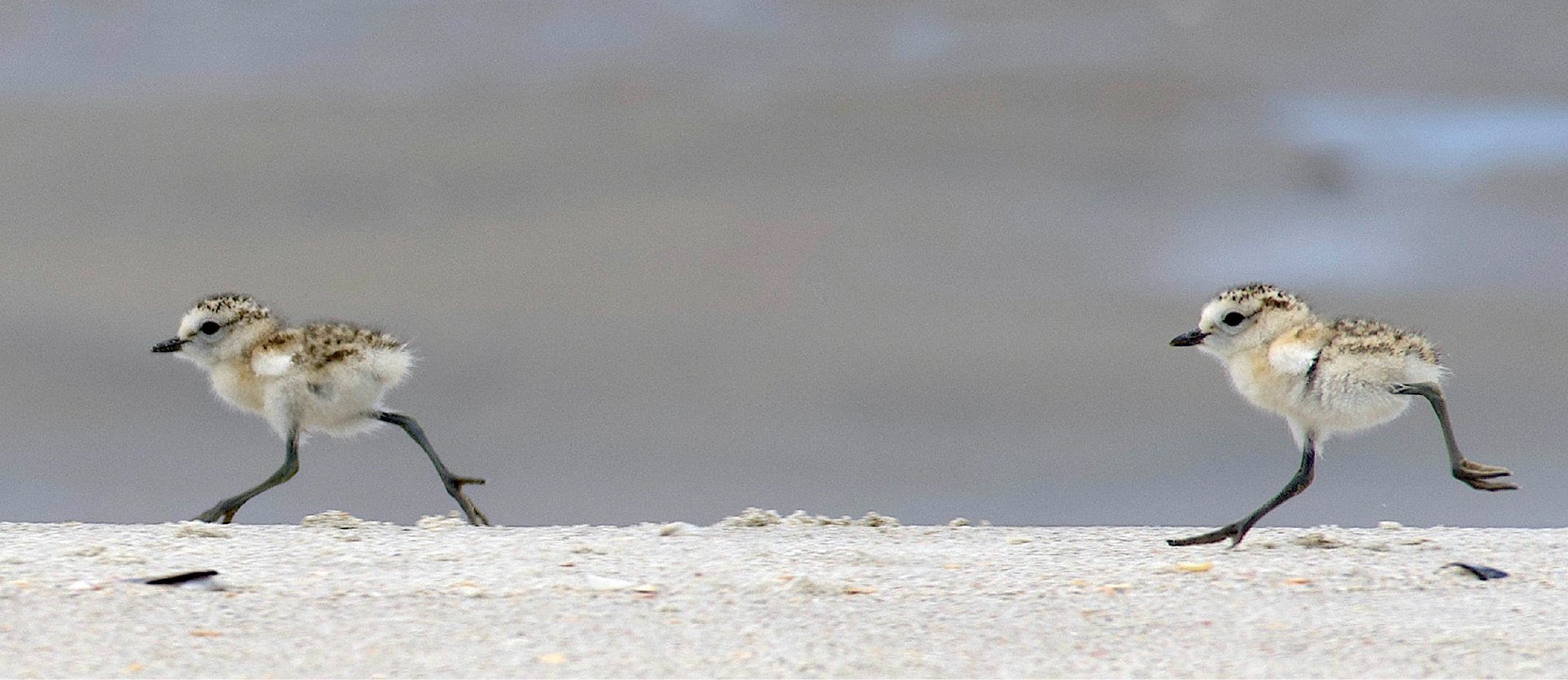
Photo: Marie Ward
NZ Dotterel Recovery Plan
From threatened to recovering, let’s keep going!
Dr John Dowding charted the decline of the NZ dotterel (tūturiwhatu) to around 1,700 birds in the 1990’s and co-wrote the 1993 NZ Dotterel Recovery Plan with Alison Davis. A huge effort involving Department of Conservation (DOC) working with communities around the North Island of Aotearoa rose to the challenge of reducing disturbance and predation to help adults and chicks survive. The Ōmaha Shorebird Protection Trust was part of that effort, which reversed the decline and lifted the conservation status of the species from Threatened to Recovering. The population was estimated at 2,600 birds in 2020.
~1700
BIRDS IN THE 1990S
Classified: Threatened
~2600
BIRDS IN 2020
Classified: Recovering
Our Ōmaha birds
The shorebirds of Ōmaha are a permanent local population. This is their home, and there is nowhere else for them to go. Our resident pairs of dotterels and oyster catchers have been living and breeding here for many years. Forming life-time pair bonds they return each year to the same patch of dune to make a scrape (hollow) and lay their eggs. The male sits on the nest at night while the female finds food. This makes him the most vulnerable of the parents to cats hunting inside the sanctuary at night. There are fewer males than females in the population as a result.
What is working well
All predators are controlled except cats. A dedicated trapping group visits our network of more than 50 traps every week to check, bait and record any catches. The predators we target are rats, mice, mustelids (weasels, stoats, ferrets), hedgehogs and possums.
The breeding areas are taped off by volunteers to guide visitors to the sanctuary away from the nesting areas. Every breeding season our volunteers monitor and record the number of breeding pairs, eggs laid and hatched, and the fate of the chicks. This information is shared with decision-makers in Council and the Local Board, and with the wider community.
The Trust has working relationships with Council officers and elected representatives. We appreciate the support from Council and the Rodney Local Board for what we do.

What challenges remain
Consistent breeding failure means the sanctuary is not living up to its name — it has become an ecological sink where very few chicks survive and adults are lost each year. Without change, the shorebirds face localised extinction.
Rising visitor numbers unintentionally disturb feeding and nesting birds, preventing chicks from gaining the energy they need to survive.
The predator fence is easily bypassed at low tide, allowing cats to enter the sanctuary at night. Cat management is not currently permitted or undertaken by Council, leaving a critical gap in protection.

Call to action
The trust calls for action to:
Manage cats inside the sanctuary
Permit extension of the predator fence on the habour side
Reduce disturbance during the breeding season
Enhance wildlife protection inside the sanctuary
These steps form the next chapter of community kaitiakitanga — a shared commitment to ensuring Ōmaha Shorebird Sanctuary becomes the safe haven it was always intended to be.
Our Trustees
We are grateful for the vision and hard work that each and every one of our trustees has selflessly contributed over the years.
Founding Trustees
Dr John Dowding
Joanne McPhee
Marie-Louise Ward
Sharon Kast
Gwenda Pulham
David Stone
Current Trustees
Marie-Louise Ward, Founding Trustee
Sue Cook, Trustee
Lesley Barley, Treasurer
Jo Strahan, Chair
Our charity number is CC43403. Our email is info@omahashorebirds.co.nz
Our Partners
The Ōmaha Shorebird Protection Trust works with many different stakeholders. We are grateful for the support of owners, managers, community groups, and conservation organisations.
Reserve Owners & Managers
Government & Conservation
Department of Conservation (Warkworth office)
Tangata Whenua
We respect the unique role of the iwi (tribe) Ngati Manuhiri who are mana whenua (holding customary authority) within the rohe (tribal area) in which the sanctuary is located.
Community Partners
National Conservation Organisations
Coming soon
Supporter opportunities
We are developing specific ways for supporters to contribute to the next chapter of the sanctuary. Watch this space for details on sponsorship packages, fence extension support, and how your contribution will be recognised.