
Kia ora koutou and greetings to all our wonderful shorebird supporters. It is hard to believe it's already August. Another breeding season is upon us. The shorebirds are finding their mates, and there are already a few scrapes (nests) appearing in the Sanctuary as they prepare to lay their eggs. Unfortunately, we remain ill-prepared to provide the safe place our precious remaining dotterel and oystercatchers need to breed. The Trust continues to work on many fronts to raise awareness and advocate for change to turn this around.
Our vision is simple and achievable:
“Ōmaha Shorebird Sanctuary is a safe place where shorebirds can feed, roost and breed undisturbed.”
Bird flu
Earlier this month, MPI confirmed the bad news that the highly contagious H5 strain of bird flu has been found in two wild birds. It is a severe viral disease that can be passed on to mammals. MPI have provided helpful information on what to do:
1. Keep your distance from sick or dead wildlife. Keep pets away too.
2. Keep clean. Wash your hands and clean your gear after being outdoors.
3. Know when to report. If you see 3 or more sick or dead wild birds in a group, report it immediately on 0800 80 99 66 or online via MPI notification.
Kiwi duets at Ōmaha
The 2026 kiwi monitoring results continue to point to a growing and expanding kiwi population moving out of Tāwharanui toward Ōmaha. For the first time, this year kiwi ‘duets’ have been detected in southern Ōmaha. How exciting to have a male and a female calling to each other … they might pair up and breed! Please share the word with your friends and visitors. Make time for your dog to become certified kiwi-friendly through free training to be offered in Ōmaha this month (tbc Sunday 23 August). Kiwis do not have a protective breastbone, and (this was new to me) they have a strong smell! Even small dogs can crush and injure them.
Chicks up close
If you hesitate to go into the Sanctuary to avoid disturbing the birds, or you haven’t got binoculars at the right moment, it is hard to properly see the tiny fluffy Tūturiwhatu chicks. This presentation charts the incredible changes over the first six to eight weeks of a chick’s life. Thank you to the very talented creator Becky Swan from Snells Conservation for permission to share this wonderful e-book of photographs and observations.
Native Nest
Through tall tropical palms and into a secret garden wrapped around a tranquil lake, Jones Road feels a world away. Chirps and squawks fill the air. This is where Tomacelle (Tom) and Ian spend their days, their doggie assistants trotting behind as they move from cages to aviaries, tending to sick and injured native birds - funded from their own pockets, driven purely by love.
Their story began long before native birds arrived. Ian’s prized parrots nuzzle his calloused hands, leaning in for almond treats and affection. Many came from dire conditions; now they live out their long lives in safety. Today, the couple’s passion is firmly with New Zealand’s native species. After a rigorous years-long process, their property is now a DOC-approved rehabilitation facility. A purpose-built hospital is underway; a rat-proof kiwi enclosure stands ready.
During our visit, a young kingfisher - saved from a cat - perched quietly in its cage. In a darkened room, a stunned huddle of ruru blinked slowly, handed over by a relieved couple who had accidentally hit him with their car. Impact strikes make up 90% of Tom and Ian’s cases.
Tom’s success comes down to dedication. Feeding a starving kererū six times a day is exhausting - but moments like releasing him weeks later up on Mount Tamahunga and seeing his mate swoop in within seconds to join him keep her going.
Until now, it’s been just the two of them, supported by family and friends. But with 150 birds rehabilitated in three years - and numbers rising - they’ve established a charity, welcoming donors and volunteers. Ōmaha is lucky to have Native Nest so close to home.
Tom’s top tips to protect wildlife: keep cats in at night, leash dogs, set rat traps, and seek immediate vet care when sh!t happens - anti-inflammatories for impact, antibiotics for cat bites. Quick action saves birds!
What’s in the box?
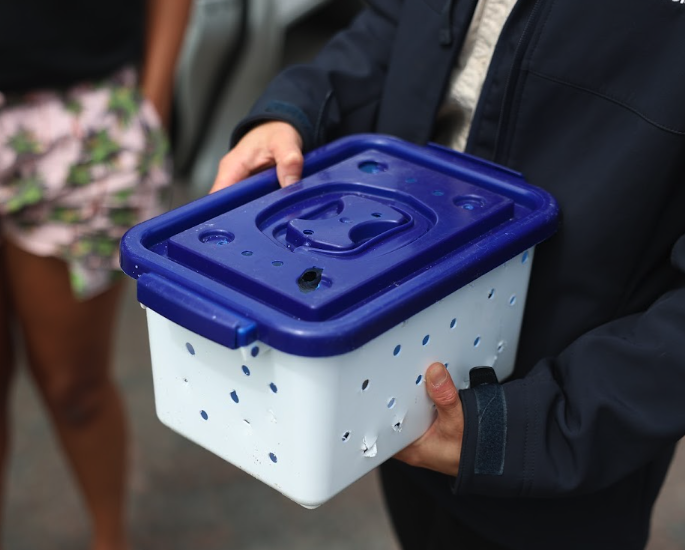
A lucky escape, some tender care and a new start for this mystery bird found hurt and in trouble near busy Tamaki Drive in Auckland. Following care and rehabilitation at Birdcare Aotearoa, it was time to find a coastal location, and Ōmaha Shorebird Sanctuary was the perfect place. Joshua Martinsen was on hand to capture the moment. Thank you to Birdcare Aotearoa, Auckland Council, Ōmaha Shorebird Protection Trust and all volunteer kaitiaki who care for our taonga species. Watch the video.
Rodney Local Board Plan 2026-2029
Rodney Local Board manage Ōmaha Shorebird Sanctuary – the only predator-fenced local purpose reserve under their jurisdiction. The Regional Parks (including Tāwharanui) are managed directly by Council under the Regional Parks Management Plan.
In July, the Trust made a submission to the Rodney Local Board’s 3-year plan. We supported many aspects of the Board’s great work while advocating for change where it is needed. If you would like a copy of the submission, please get in touch. One specific aspect we continue to ask the Board to support is an Auckland-wide approach to responsible pet ownership. Here is an excerpt from the Trust’s submission:
“Attitudes to responsible pet ownership are shifting, and the upcoming review of the Regional Pest Management Plan provides an important opportunity for the Board to advocate to the governing body to introduce a bylaw that addresses roaming cats. Nationally, cats have been recognised in the Predator 2050 strategy, and the Board is aware of the practice of dumping unwanted kittens, the impact on wildlife of both domestic and feral cats and the need for an Auckland-wide approach.
In the 12 months to June 2026, cats were seen on camera inside Ōmaha Shorebird Sanctuary 37 times. On and around Mount Tamahunga, where kiwi have been reintroduced, cats were caught on camera 113 times in the first five months of this year.
The Trust requests the Board add the following Advocacy points:
• Advocate for an Auckland-wide approach to responsible pet ownership focusing on micro-chipping, registering and de-sexing all cats by 2027.
• Advocate for an Auckland-wide approach to managing free-roaming domestic / owned cats in wildlife protection reserves.”
Conservation Collaborations
You may recall from our April update that the Trust applied for grant funding from the Department of Conservation Community Fund to extend the predator fence. We still haven’t heard the outcome. However, a grass-roots collaboration with our Community Park ranger and DOC’s Tara iti team has resulted in four cameras set up inside the Sanctuary to monitor shorebird nests this season to further strengthen the case for change.
The Trust is a founding member of the Whangateau Catchment Collective, working for a healthy harbour where the birds can safely feed at low tide. There are some amazing community projects kicking off in the catchment. Find out more on Facebook.
Community planting day at Tamahunga Stream, Saturday 22 August
Harbour edge workshop, Point Wells, Sunday 13 September
Have your say on the exciting Ti Point Forest Project
Thanks to our volunteers
The Trust is supported by a wonderful group of community volunteers who over the last few months have delivered brochures to our Ōmaha neighbours, trapped predators inside and outside the Sanctuary, gathered data from trail cameras, helped with social media, and much more. We couldn’t do it without you!
Trustees: Lesley Barley, Sue Cook, Jo Strahan and Marie Ward
Get in touch with us at info@omahashorebirds.co.nz