
Latest from the Sanctuary
There are currently 3 variable oystercatcher (VOC) chicks inside the Sanctuary; two tiny ones with one pair and one older chick that we hope will fledge soon. There are many more VOC pairs incubating eggs that we hope will hatch over the next few weeks.
To date, we have lost approx 47 eggs or newly hatched chicks from 20 pairs NZ dotterels (tuturiwhatu). Possibly 2 nests have hatched, with one chick sighted on 3 occasions on the harbour side of the spit. We often don’t know why some nests have failed as there has been no evidence of broken shells that suggest predation by rats or mustelids. There was a big weather event 28/29 Oct 2025. Nests were high up in the dunes and well out of the way of high tides. Two NZ dotterel nests at risk of flooding were expertly ‘lifted and shifted’ by DOC approved volunteers and sandbags used to protect the new location. Both pairs returned to the nests, and one of the nests has recently hatched 2 small chicks.
The Birds NZ November Wader count observed only 38 adult NZ dotterels inside the Sanctuary, far fewer than have been counted in previous years.
Governance
This year we farewelled trustees Chris Allen and John Mew. We thank them for their service and support of shorebirds and community conservation over the years. We also welcomed Jo Strahan and Lesley Barley to the roles of OSPT Chair and Treasurer, respectively.
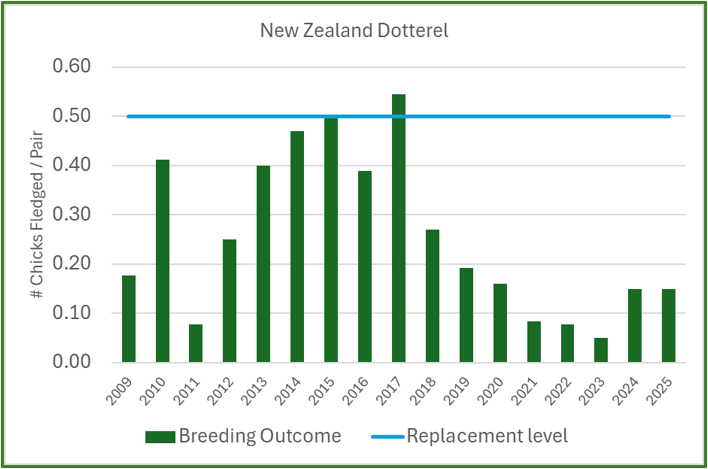
Ōmaha NZ Dotterel Breeding Report
We shared the 2024/2025 breeding season results a - dreadful year in which 40 breeding pairs of three shorebird species (dotterel, oystercatcher and pied stilt) laid clutch after clutch (potentially over 200 eggs!) and only 3 dotterel chicks survived to fly. These data added to the NZ dotterel tuturiwhatu productivity records collected since 2009 show how dire the long-term survival of NZ dotterel at Ōmaha Spit is. Dr John Dowding established a productivity of 0.5 (blue line on the graph) for NZ dotterel breeding sites was required to ensure long term survival of the species. Despite many hours of volunteer work, we are far from the breeding success expected from a managed site.
Thanks again on behalf of Trustees Lesley Barley, Sue Cook, Jo Strahan and Marie Ward.