
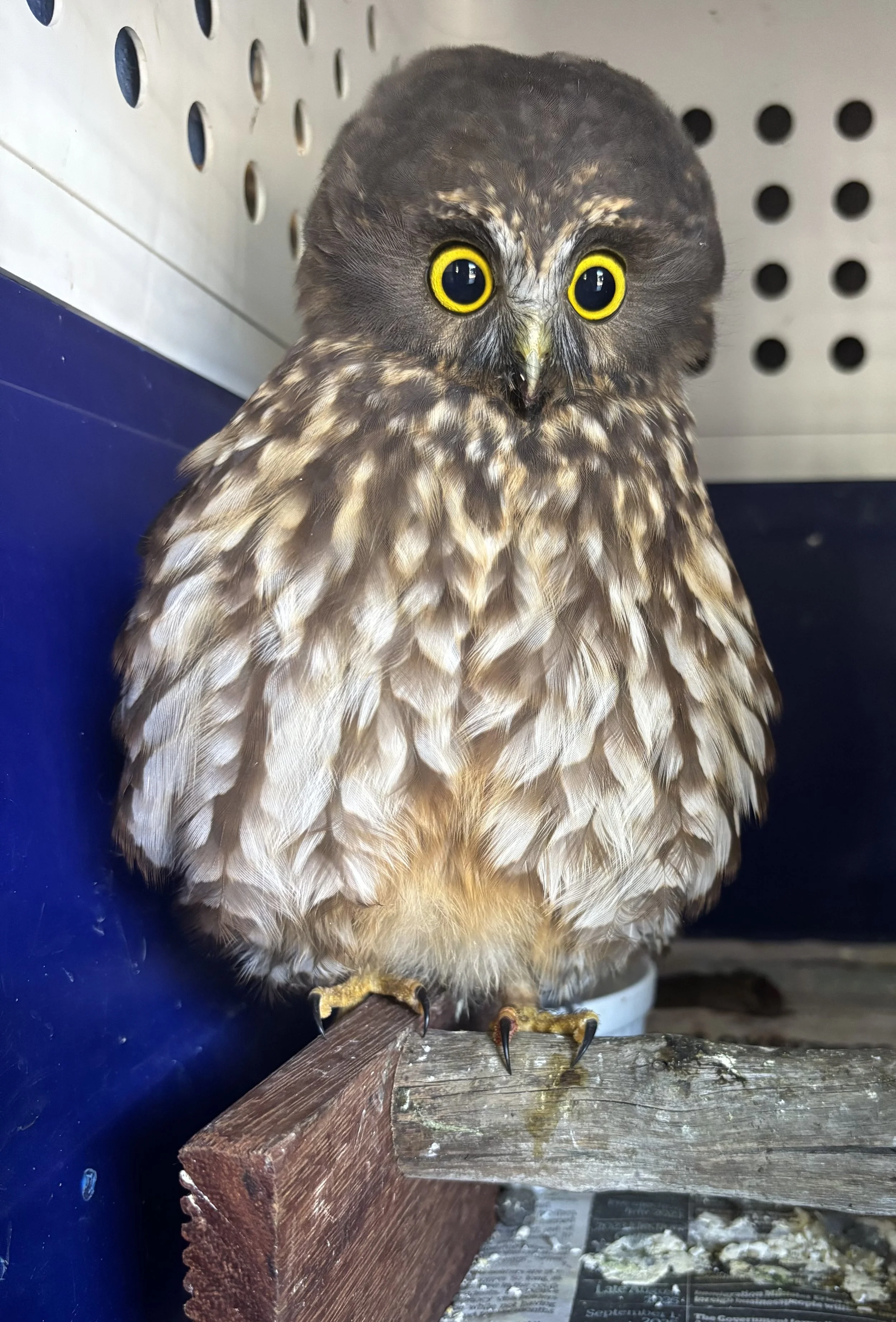
Ruru in rehab
Through tall tropical palms and into a secret garden wrapped around a tranquil lake, it’s a world away on Jones Road. Chirps and squawks fill the air. This is where Tomacelle (Tom) and Ian spend most of their days. With their faithful doggie assistants trotting behind them, they move from cages to aviaries tending to sick and injured native birds — all out of their own pockets, and all for the love of the creatures who need them most.
Their journey began long before native birds arrived at their doorstep. Ian’s prized parrots nuzzle his callused hands looking for almond treats, leaning into his touch with unmistakable affection. Many of these intelligent birds were rescued from dire conditions; now they live out their long lives in safety and companionship. Today, the couple’s shared passion has shifted to New Zealand’s native species. After a lengthy and rigorous process, their property is now a DOC‑approved native bird rehabilitation facility. A purpose designed hospital is under construction; an outdoor rat-proofed kiwi enclosure is ready.
On the morning we visited, a young kingfisher — saved just in time from the jaws of a cat — perched quietly at the back of its cage. In a darkened space, a ruru sat in a stunned huddle, its big yellow eyes blinking slowly. The couple who accidentally hit him with their car were relieved to hand him over to Tom. Impact strikes account for 90% of the cases Tom and Ian see.
Tom’s success rate comes down to sheer dedication. Feeding a starving kererū six times a day — beginning at 5am and ending close to midnight — is exhausting work. But the reward is profound. She recalls releasing a rehabilitated kererū on Mount Tamahunga: the bird flew up to a branch, and within seconds its mate swooped in to greet her. Moments like that keep Tom going.
Until now, it has been just the two of them, supported by family, a few neighbours and friends. But with 150 birds rehabilitated in the past three years — and numbers rising — Tom and Ian have established a charity and the door is open to donors and volunteers. Here in Omaha, surrounded by wildlife protection areas, we are lucky to have this rehabilitation facility so close to home.
Tom’s top tips are to protect wildlife from harm. Keep your cats inside at night. Put your dog on a lead. Get some rat traps round the property. When sh!t happens immediate vet attention - anti‑inflammatories for impact, or antibiotics for cat bites – will improve an injured bird’s chances of recovery.
Kia kaha to all our kaitiaki!